Entry Rewards Sparking Shifts from Mobile Live Dealer Tables to Sports Event Platforms
Petra Flores · Jul 18, 2026

Entry Rewards Sparking Shifts from Mobile Live Dealer Tables to Sports Event Platforms
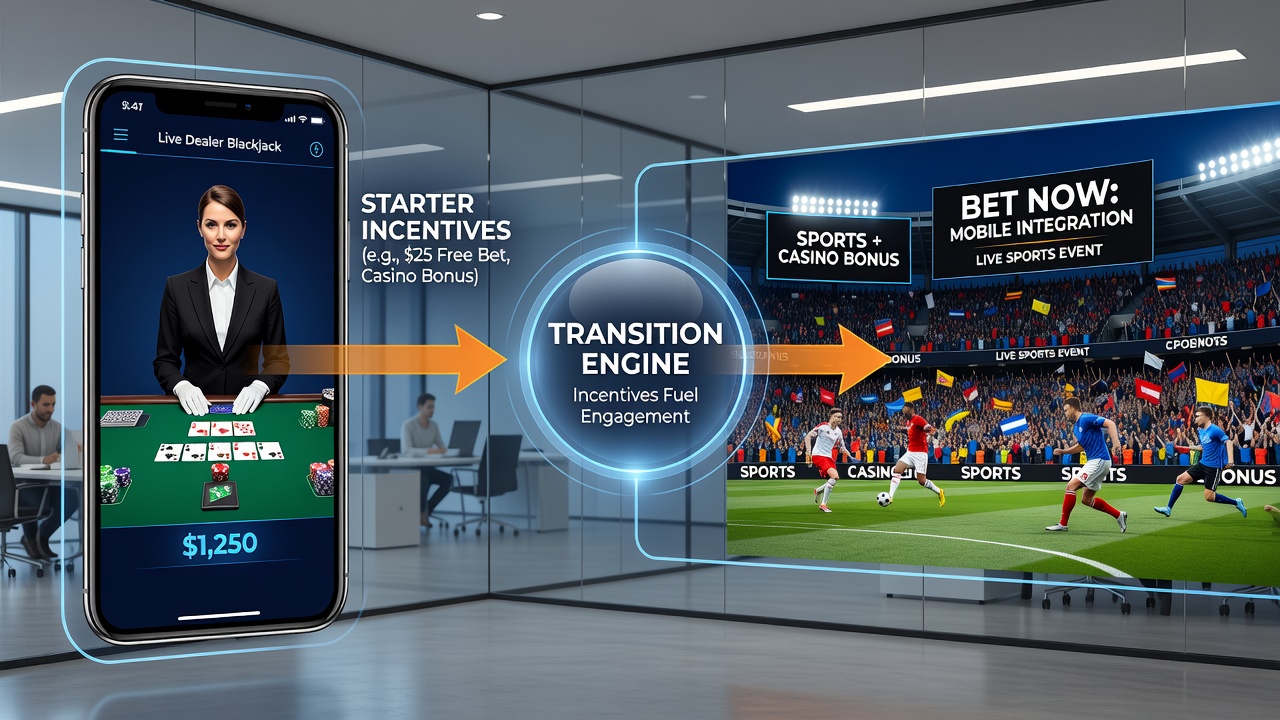
Starter incentives appear across regulated markets as structured offers that include deposit matches, free spins on table games, and initial risk-free bets on athletic events. These rewards encourage users to move between mobile live dealer sessions and sports engagement without requiring separate account setups in many jurisdictions. Data from integrated platforms shows that participants who activate entry-level bonuses often complete transitions within the first week of registration, linking live dealer interactions directly to event-based wagers through shared wallets and loyalty tracking.
Mechanics of Transition Incentives
Operators structure these offers so that progress in one format feeds into eligibility for the next, such as completing a set number of live dealer hands unlocking a sports-specific credit. Mobile applications handle the flow through unified interfaces where users switch from roulette streams to football odds with a single tap, and the bonus balance carries over automatically. Regulatory filings indicate that this design reduces friction, allowing account verification steps completed once to cover both live dealer and sports modules in platforms operating under frameworks like those in Ontario.
Research indicates that users respond to tiered requirements where live dealer play counts toward sports bonus releases, and vice versa. For instance, wagering thresholds on blackjack tables might release a matched amount for basketball event selections, creating measurable movement between the two formats. Figures from platform analytics reveal consistent patterns in markets where such cross-format tracking operates, with average session counts rising when entry rewards span both categories.
Market Data on User Movement Patterns
Analyses from industry reports highlight that entry incentives correlate with increased cross-format activity during periods of major sports calendars. In July 2026, ongoing expansions in mobile licensing across multiple states coincided with updated bonus structures that explicitly reward transitions, according to filings tracked by gaming oversight bodies. Users who begin with live dealer tables frequently activate sports components once initial table bonuses reach completion thresholds, while those entering via event wagers explore dealer streams through similar reward pathways.
Studies conducted on regulated platforms show session duration extending when bonuses link the formats, because participants maintain activity to meet combined playthrough conditions. Observers note that this linkage appears in data from both European and North American operators, where single sign-on systems track progress across live video tables and real-time odds boards without additional deposits in many cases.
Examples from Regulated Jurisdictions
One documented case involves platforms in Canadian provinces where entry offers require a minimum live dealer deposit before sports credits activate, resulting in documented shifts tracked through transaction logs. Another instance appears in Australian markets, where state-level rules permit bonuses that count live dealer outcomes toward event wager releases, prompting users to alternate between formats within single app sessions.
Those who've examined transaction records find that the average number of format switches per user increases when starter incentives include both elements from the outset. Platforms achieve this through automated systems that flag completed live dealer rounds and apply corresponding sports credits without manual intervention.
Technical Integration Supporting Transitions
Payment processors and game aggregators enable these movements by maintaining unified balance ledgers that recognize activity across live dealer feeds and sports books. When a user finishes a required number of dealer interactions, the system releases sports event funds automatically, maintaining compliance with jurisdiction-specific rules on bonus accounting. This setup appears in multiple licensed environments where regulators require transparent tracking of all reward redemptions.
Platform updates rolled out ahead of July 2026 incorporated enhanced APIs that further streamlined these handoffs, reducing the steps needed to move from one format to the other while preserving audit trails. Data shows that such technical features align with higher completion rates for combined bonus conditions compared to isolated offers.
Regulatory Context and Reporting
Authorities in various regions require operators to report how entry incentives influence user behavior across product types, including live dealer and sports modules. iGaming Ontario publishes periodic summaries that track these patterns in licensed environments, while American Gaming Association compiles broader industry metrics showing similar trends in U.S. markets with mobile access. These reports document the prevalence of cross-format bonuses without attributing causation to any single factor.
Conclusion
Starter incentives continue to shape how participants navigate between mobile live dealer play and sports event engagement through structured reward pathways and technical integrations. Available data from regulated platforms illustrates consistent movement patterns tied to these offers, with tracking systems capturing transitions across formats in multiple jurisdictions. As licensing frameworks evolve, the role of entry rewards in connecting these entertainment categories remains a measurable element within operational reports.